

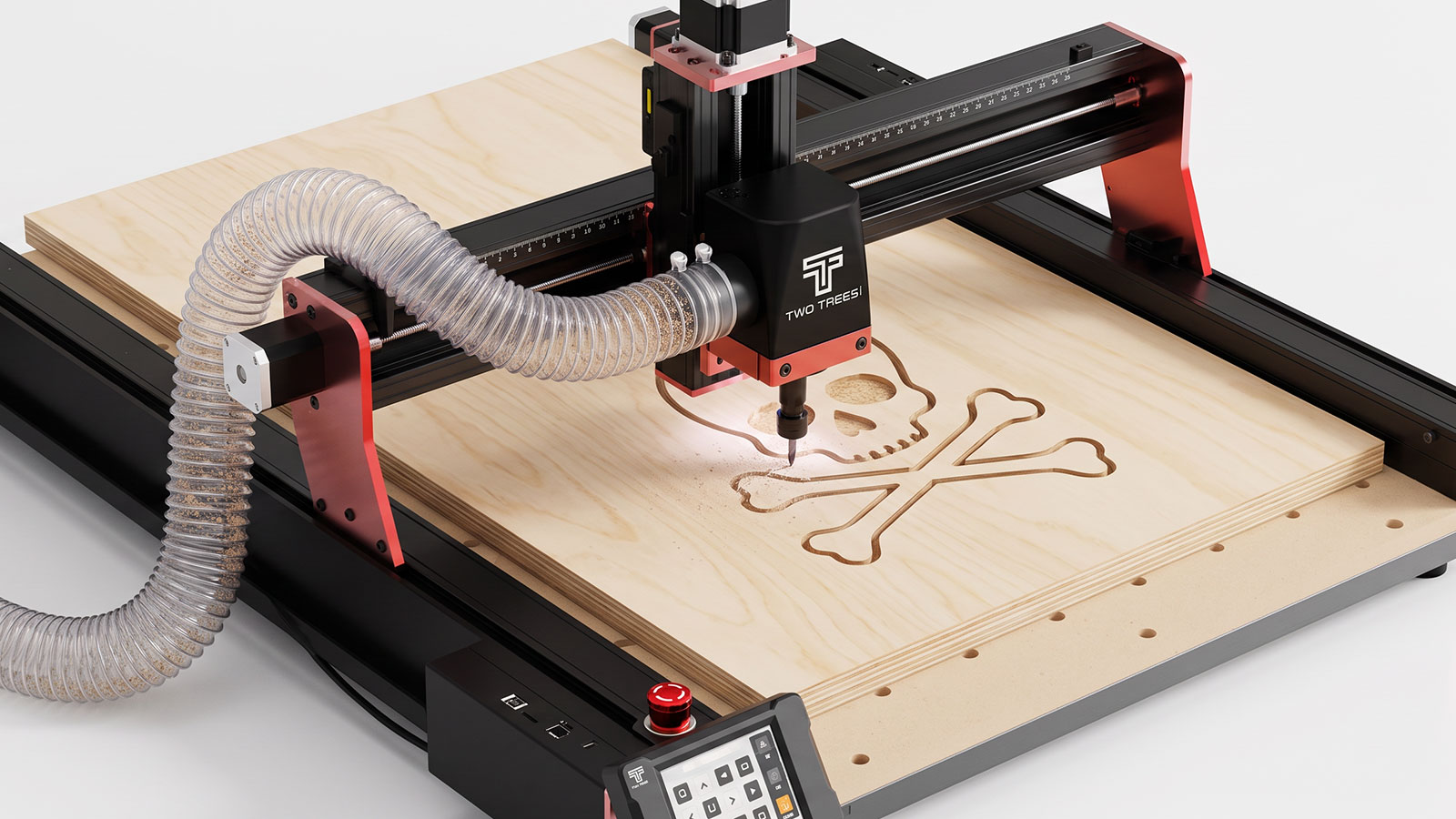
If you are wondering what materials can a CNC router cut, the short answer is more than most people expect. A CNC router will comfortably cut timber, plywood, MDF, acrylic, HDPE, foam, composite board and soft metals such as aluminium, brass and copper. It struggles with anything too hard, brittle or thick for its spindle and bit, including hardened steel, stone, glass and ceramic tile. This guide covers which materials suit a CNC router, how to pick the right bit and settings for each one, what to avoid, and how a router compares to a laser cutter or 3D printer.
What a CNC Router Can Cut
A CNC router spins a cutting bit at high speed and moves it through a material along a programmed path, milling out a shape, engraving a surface, or cutting all the way through a sheet. Because it relies on speed rather than raw force, it suits materials that are relatively soft or machine cleanly at those speeds. As a rule, if a material can be worked with a hand router, jigsaw or file, a CNC router can usually manage it too, with far more precision and repeatability.
- Timber & sheet goods — solid wood, plywood, MDF and particleboard are the most common CNC router materials.
- Plastics — acrylic, HDPE, Delrin (acetal), PVC foam board and polycarbonate are all workable with the correct bit and feed rate.
- Foam — EVA foam, polystyrene and foam board cut easily and suit signage, props and mould patterns.
- Composites — carbon fibre sheet, fibreglass and plastic-faced board can be cut, though they wear bits faster and need dust control.
- Soft metals — aluminium, brass and copper are cuttable with a metal-rated bit, slower spindle speed and steady feed rate.
Wood & Sheet Materials
Wood is where most CNC routers spend their time, and it is the most forgiving material to start with. The main differences between wood types come down to grain, density and how much dust and chip-out they produce.
Solid Timber, Plywood, MDF & Particleboard
- Solid timber — cuts cleanly across the grain but can tear out along it, so bit choice and feed direction matter.
- Plywood — stable and predictable, though internal voids in cheaper sheets can leave small gaps on a cut edge.
- MDF — the easiest sheet material to machine, with a smooth, consistent cut, but it produces fine dust that needs proper extraction.
- Particleboard — cheap and workable, though its rougher texture is less forgiving on fine detail.
Plastics & Acrylic
Plastics are more sensitive to heat than wood, so speed and feed rate matter more. Get them wrong and the plastic melts back onto the bit instead of cutting away as a chip.
Acrylic
Cast acrylic machines more cleanly than extruded acrylic, which is softer and more prone to melting at the cut edge. A single-flute, O-flute bit designed for plastics, run at a slower feed and higher spindle speed, gives the cleanest edge and reduces gumming.
HDPE, Delrin & Other Engineering Plastics
- HDPE — machines well with minimal melting, a good choice for outdoor signage and jigs.
- Delrin (acetal) — dimensionally stable and common for precision parts, gears and fittings.
- PVC foam board — very easy to cut at low speed, though it needs good ventilation since it can release irritant fumes if it overheats.
- Polycarbonate — tougher to machine cleanly, prone to melting and chipping, so it needs a sharp bit and slow, light passes.
Foam & Composite Boards
Foam is about as easy as CNC materials get. EVA foam, polystyrene and rigid foam board offer almost no resistance, so they cut quickly and suit cosplay props, signage and mould patterns.
Composite boards are a step up. Carbon fibre and fibreglass are abrasive and wear out standard wood bits quickly, so a carbide bit rated for composites is worth the cost, and both produce dust that is genuinely hazardous to breathe in.
Soft Metals: Aluminium, Brass & Copper
A hobby-grade CNC router can cut soft, non-ferrous metals, but only with the right setup: a metal-rated bit (usually a single or two-flute carbide end mill), a lower spindle speed than for wood, a slow steady feed rate, and ideally some lubrication or air blast to stop the bit overheating and chips welding back onto the cutting edge.
- Aluminium — the most commonly CNC-cut metal on hobby machines, used for brackets, enclosures and mounting plates.
- Brass — machines well and suits name plates, fittings and small decorative parts.
- Copper — soft and workable, though it can be gummy if the feed rate is too slow.
Steel and other hardened metals are a different story. A wood-router-style spindle usually lacks the rigidity, power or speed range to machine them safely, and the bit will wear out or snap. For real steel, you need a dedicated CNC mill, not a CNC router.
Materials to Avoid or Handle With Extra Care
A few materials are either unsafe or impractical to cut on a standard CNC router.
- Glass, ceramic and stone tile — too brittle and abrasive for a router bit; these need specialised diamond tooling.
- Hardened or structural steel — too rigid for a router's spindle and bit; use a CNC mill instead.
- Solid PVC in a poorly ventilated space — can release irritant fumes if it overheats, so run it slowly with good airflow.
- Treated or reclaimed timber — chemical preservatives create hazardous dust, and hidden nails or screws will destroy a bit.
- Carbon fibre without dust control — the dust is a genuine health hazard, so extraction and a proper mask matter.
Choosing the Right Bit & Settings for Each Material
Matching the bit to the material makes the difference between a clean cut and a burnt, melted or chipped one. As a starting point:
- Wood, MDF & plywood — a two-flute up-cut or compression bit at moderate speed gives a clean edge with minimal tear-out.
- Acrylic & rigid plastics — a single-flute O-flute bit run slower on feed and faster on spindle speed prevents melting.
- Foam — almost any sharp bit works, so prioritise a faster feed rate to avoid tearing.
- Composites — a carbide bit rated for composites lasts far longer than a standard wood bit.
- Soft metals — a metal-rated carbide bit, slower spindle speed, slower feed and, where possible, a lubricant or air blast.
Finishing & Cleanup After Cutting
Most CNC-cut parts benefit from cleanup once they come off the bed. Sanding smooths tool marks on wood and plastic edges, deburring removes the sharp burr that soft metals leave behind, and a light polish brings up the finish on acrylic edges. A compact rotary tool with sanding drums, polishing bits and small cutting discs handles all of this in one kit, and gets into detail work a bench sander cannot reach.
Shop Rotary Tool KitsCNC Router vs Laser Cutter vs 3D Printer
A CNC router is not the only maker tool that shapes materials, and it is worth knowing when a different machine is the better fit.
- CNC router — best for cutting and shaping solid material such as timber, plastic sheet and soft metal, and for parts that need real mechanical strength.
- Laser cutter/etcher — faster and more precise for thin sheet material and detailed engraving, but generally limited to thinner stock and cannot cut metal beyond light surface marking.
- 3D printer — better for complex geometric shapes that would be difficult to cut from a solid block, and for prototyping before committing to a CNC-cut version in a stronger material.
Many makers end up using more than one of these tools, since each suits certain jobs. If you already own a 3D printer, or are thinking about adding one, it is a useful complement to a CNC router rather than a competitor to it.
Shop FDM 3D PrintersCommon Mistakes to Avoid
- Using a wood bit on plastic or metal — the wrong flute geometry causes melting on plastic and rapid wear on metal.
- Skipping dust extraction — fine dust from MDF, composites and carbon fibre is a genuine health risk, not just a mess.
- Reusing settings from a different material — every material has its own sweet spot for feed and speed.
- Not securing the material properly — a workpiece that shifts mid-cut can ruin the part and damage the bit.
- Ignoring PPE — safety glasses and a mask are cheap insurance against dust and flying chips.
Frequently Asked Questions
Can a CNC router cut metal?
Yes, a CNC router can cut soft, non-ferrous metals such as aluminium, brass and copper, provided you use a metal-rated bit, a slower spindle speed and a steady feed rate. Hardened steel and stainless steel need the rigidity and power of a dedicated CNC mill instead.
What is the easiest material to cut on a CNC router?
MDF and plywood are the most forgiving materials for beginners. They cut cleanly with inexpensive bits, do not melt, and tolerate minor mistakes in feed rate or spindle speed while you are still learning your machine.
Can a CNC router cut acrylic without melting it?
Yes, with the right approach. Use a single-flute O-flute bit designed for plastics, run a slower feed rate with a higher spindle speed, and choose cast acrylic over extruded acrylic where possible, since it machines more cleanly.
Do I need dust extraction for a CNC router?
Yes, especially with MDF, composites or carbon fibre. The fine dust is a respiratory hazard, so a shop vac with a dust shoe, plus a mask and safety glasses, keeps your workspace and lungs safer.
What is the difference between a CNC router and a CNC mill?
A CNC router is lighter and faster, built for wood, plastic, foam and soft metals. A CNC mill is heavier and more rigid, built to handle hardened metals like steel.
Can a CNC router cut glass or stone?
No, standard CNC router bits are not suited to glass, ceramic or stone tile. These materials are too brittle and abrasive, and cutting them requires specialised diamond tooling rather than the wood or plastic bits used on a typical hobby CNC router.
Once you know which materials suit a CNC router, choosing your next project gets easier. Start with wood or MDF, move on to acrylic and other plastics as you get comfortable with feed rates, and only attempt soft metals once you have the right bits and technique. Dust extraction and basic PPE make the difference between a smooth build and a frustrating one.