

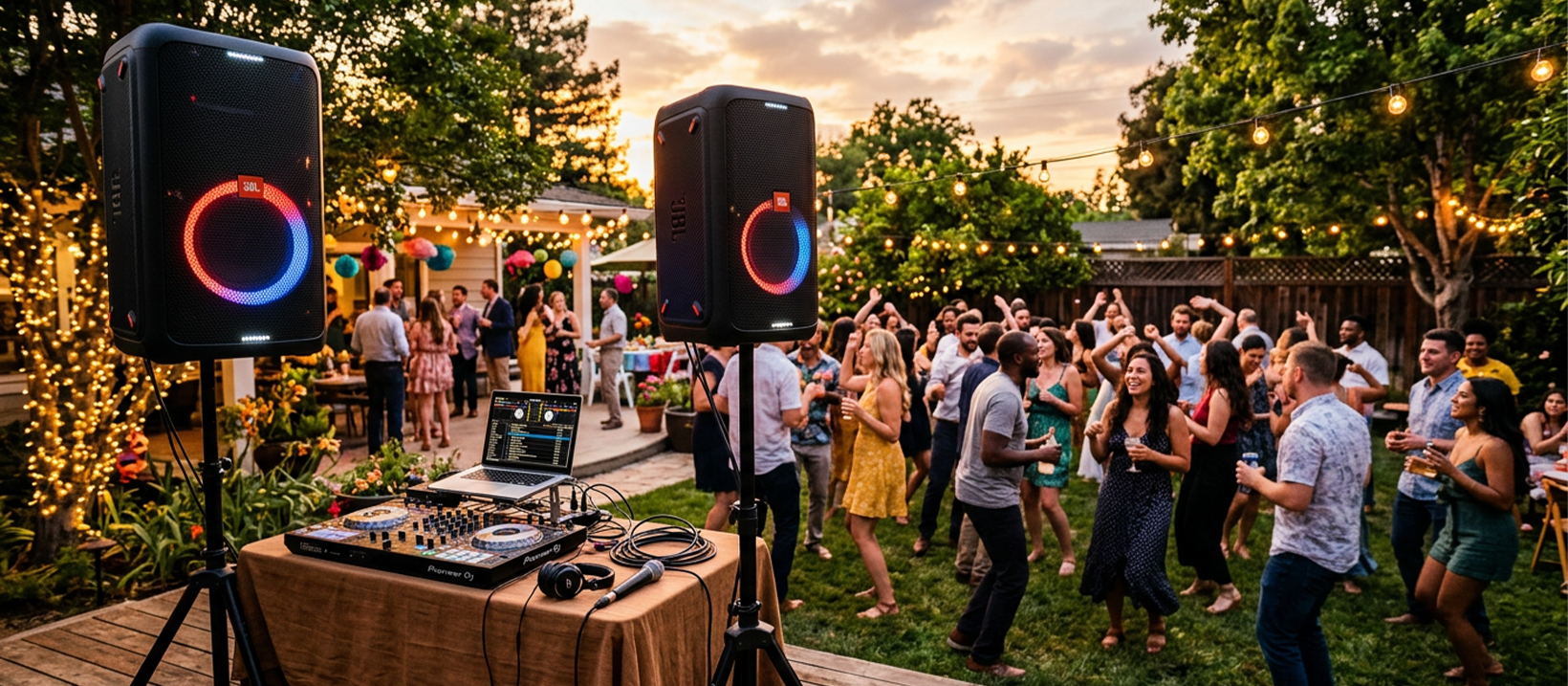
Amplified vs Un-Amplified Speakers
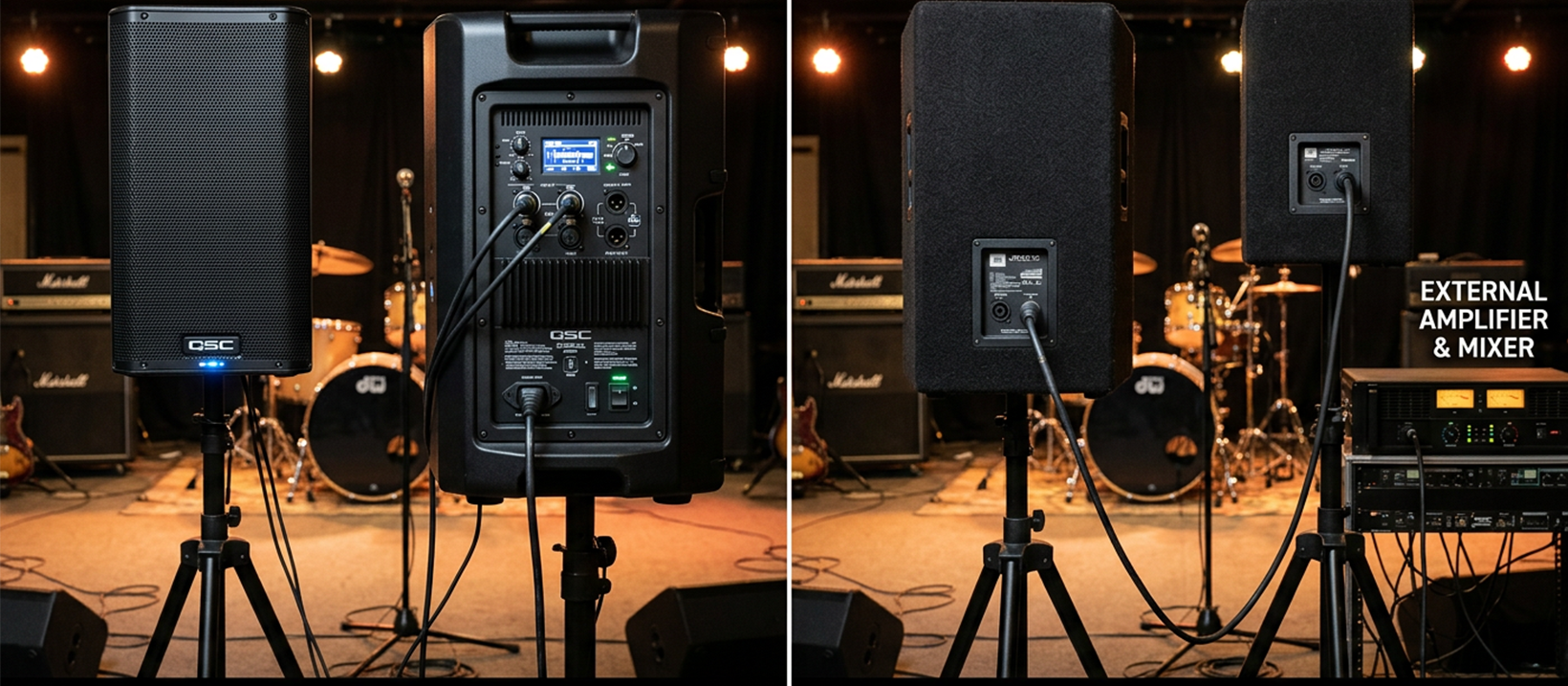
The first decision you'll face when choosing a party speaker is whether to go amplified (active) or un-amplified (passive). It's a more practical distinction than it might seem — it determines what other gear you'll need, how simple the setup is, and how much you'll spend overall.
Un-Amplified (Passive) Speakers
Passive speakers contain only a driver and crossover — they have no built-in amplification. To use them, you'll need a separate power amplifier or a receiver/HiFi system with a speaker output. If you already own a capable amplifier, passive speakers can be an excellent value, since you're only buying the speaker itself. They're also a great option if you want to match specific speakers to a specific amp for fine-tuned audio performance.
- Requires a separate amplifier — either a dedicated power amp or a HiFi receiver with speaker terminals
- Lower upfront cost — if you have existing amplification, you may only need a roll of speaker cable
- More flexibility — mix and match speakers and amps to suit your taste and budget
Amplified (Active) Speakers
Active speakers have a built-in amplifier, which means they're largely self-contained. Plug in power, connect a music source, and you're ready to go. They accept line-level inputs — a standard 3.5mm aux cable, RCA outputs from a mixer, Bluetooth from your phone — and handle the amplification internally. Active speakers are by far the most popular choice for casual party use because the setup is so straightforward.
- All-in-one convenience — no separate amp required
- Multiple input options — most support Bluetooth, aux, and USB at minimum
- Optimised performance — the internal amp is matched to the drivers at the factory
Features of Amplified Speakers
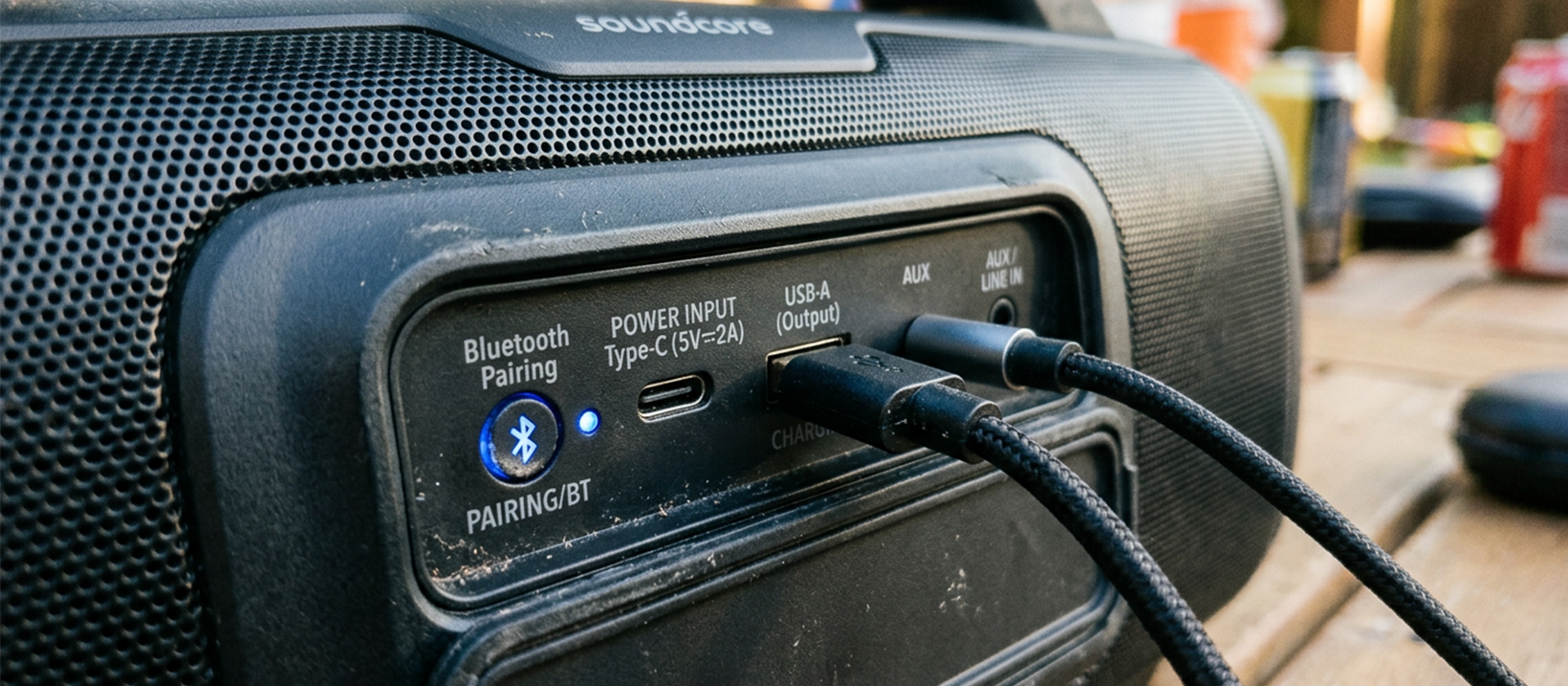
Not all active speakers are created equal. Once you've decided to go amplified, the next question is which features matter for your setup. Here's a rundown of the most common options you'll see:
- Bluetooth tethering — stream wirelessly from your phone, tablet, or laptop. Most modern active party speakers support Bluetooth 5.0 or higher, giving you a reliable connection up to 10 metres away. Many also support playback controls from the speaker itself.
- Memory card & USB playback — load your playlist onto a USB drive or SD card and plug directly into the speaker. No phone, no app, no connection drops. Great for set-and-forget background music.
- Built-in rechargeable battery — battery-powered speakers are a game-changer for outdoor events where a power outlet isn't nearby. Look for speakers with at least 6–8 hours of battery life at moderate volume.
- TWS (True Wireless Stereo) — some speakers support pairing two units wirelessly to create a stereo pair. Excellent for larger spaces where you want sound coverage from both sides of the room.
- Mic & guitar inputs — larger PA-style active speakers often include XLR or 6.5mm inputs for a microphone or instrument. Useful if you're running speeches, live music, or karaoke.
Key Specs to Understand
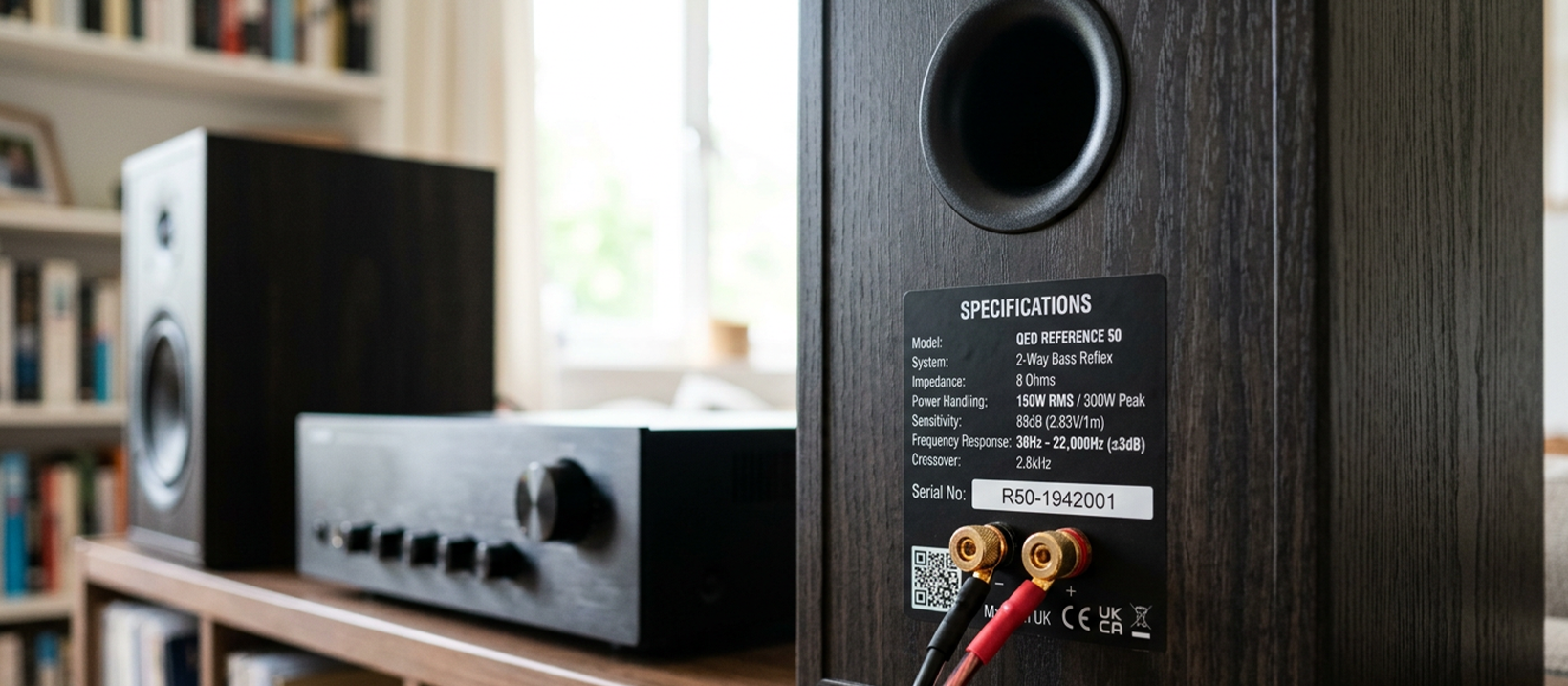
Speaker specs can look intimidating, but a few key figures tell you most of what you need to know when comparing models.
- Wattage (WRMS) — always look at WRMS (Watts Root Mean Squared), not peak wattage. Peak figures are a marketing number; WRMS is the sustained, real-world power output. For a small backyard party, 50–100W WRMS is typically plenty. For a larger event or outdoor space, look for 200W+ WRMS.
- Frequency response — expressed as a range like "60Hz–20kHz". The lower the bass figure (Hz), the deeper the rumble. The higher the treble figure (kHz), the more detail in the highs. A response that extends below 80Hz will give you noticeable bass without a separate subwoofer.
- Driver configuration — a woofer (bass/mids) paired with a tweeter (highs) gives cleaner, more balanced sound than a single full-range driver. Many party speakers in the 10"–15" range use a two-way configuration for this reason.
- Sensitivity (dB SPL) — measures how loud a speaker gets for a given input wattage. A sensitivity of 95dB or higher is considered efficient; these speakers will get louder on less power than a low-sensitivity equivalent.
Choosing the Right Speaker for Your Event
The best speaker for you depends on where and how you'll use it. Here's a quick framework to narrow things down:
- Small indoor gatherings (lounge room, kitchen) — a compact active Bluetooth speaker with 30–80W WRMS will do the job without overwhelming the space. Portability is a bonus.
- Backyard & outdoor parties — go for a battery-powered active speaker with at least 100W WRMS. Look for water resistance ratings (IPX4 or better) if there's any chance of rain.
- Large events & hall hire — consider a pair of active PA speakers on speaker stands for even coverage. A 12" or 15" driver in the 300–500W WRMS range will fill most hall-sized spaces comfortably.
- Speeches & live music — a PA speaker with a mic input and feedback control is essential. Pair it with a wired microphone for reliable, feedback-free performance.
If you're unsure which option is right for you, our team at any Jaycar store can walk you through the options in person.