

Save big bucks on your electricity bill with our easy-to-follow guide to cutting down your usage.
In this five-minute read, we'll show you how to figure out where you're losing money to standby power, as well as set up timers to make the most of off-peak current.
1. Identify Thirsty Appliances
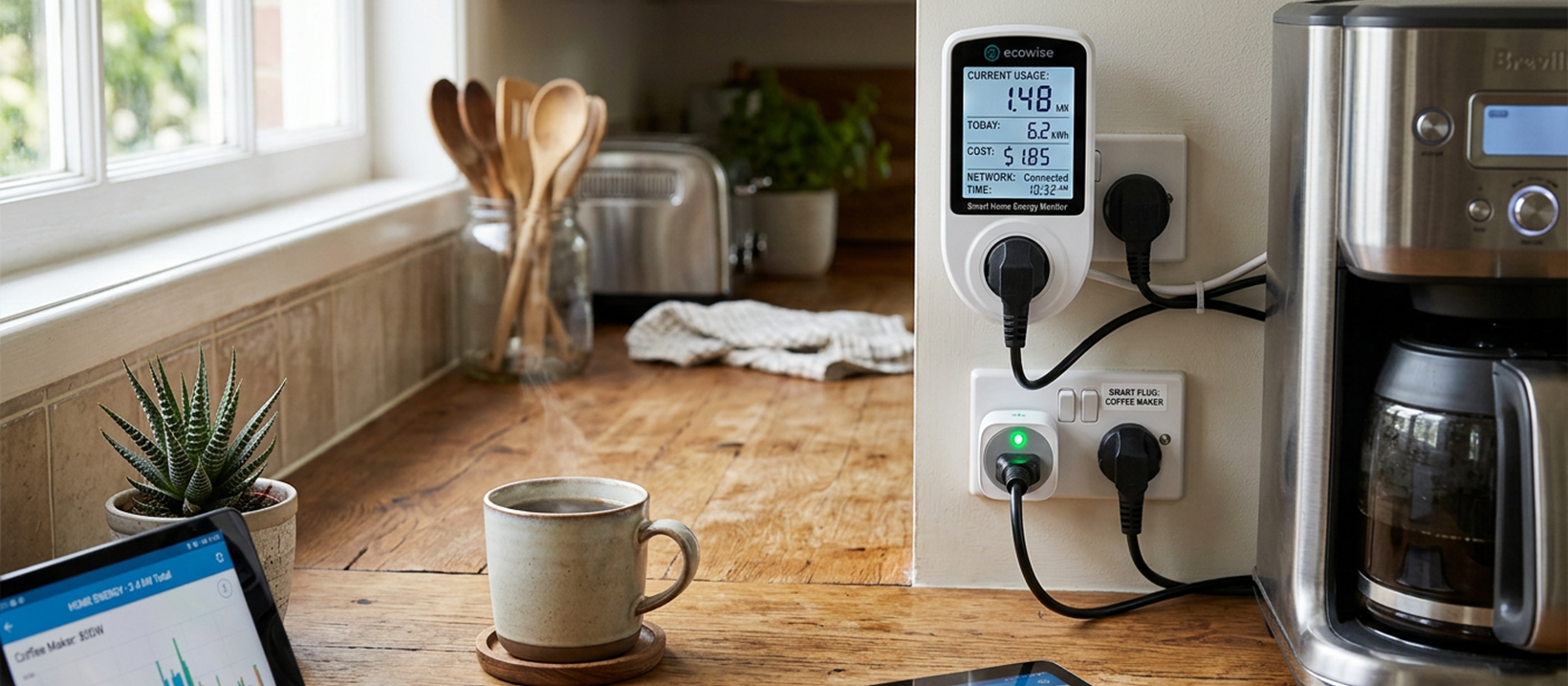
Start your low-energy crusade by using a power meter to identify electricity hogs in the home — these might be costing you a lot more money than you realise! Some power meters have an extendable display that lets you easily monitor how much power a major appliance — like your fridge — is using, without having to pull it out into the middle of your kitchen.
Standby power can be a major energy leak: your power meter with extendable display might reveal that an item such as a kitchen appliance may be costing you almost as much in standby mode as it does to actually use.
Shop Mains Control & Protection2. Be Smart with Your Switches
Switching some appliances on and off every time you need to use them can be a pain, unless you plug them into a remote-controlled mains outlet. Another easy way to save on standby power is to plug your entire home entertainment system into one powerboard, and then simply switch it off at the wall whenever it's not in use.
Smart WiFi powerpoints also let you manage or schedule energy use from a distance using your smartphone. Some units have a built-in power analysis feature, so you can save on not having to buy a separate meter.
Shop Smart Home Control3. Charge Devices Only as Needed
In particular, be mindful of devices left to float-charge. From cordless vacuum cleaners to laptops or other devices that run off a Li-Ion battery, these will hold charge for extended periods when not plugged in. Just recharge after use, and once the battery is full, unplug the charger.
Do an audit of all the chargers that might be plugged in around the house. Instead of juicing up your phone or Bluetooth® speaker overnight, plug them into a spare USB port on your laptop, games console or even your TV while in use — it will do double duty to charge your electronics.
4. Avoid Peak Tariff Periods
Schedule a time during shoulder or off-peak tariff to charge everything at once using a six-way USB powerboard that you can easily switch on and off as needed. If you have a chest freezer that's getting the workout of its life, keep it closed and switched off during peak-tariff periods as much as possible — the frozen goods within will help maintain the temperature.
Plug it into a smart timer to run it during off-peak and shoulder periods, as well as selected times of heavier use during the week.
5. Keep Track of Your Costs
Be smart and selective about the power-saving strategies that are going to give you the best mileage. A couple of inexpensive timers that save you $100 per quarter are a great investment, but buying a Wi-Fi plug for every major appliance may end up costing you more than you save.
Remember: power-saving devices are a one-off outlay, but the savings they provide will keep on giving. You might also consider low-voltage LED lighting as another easy way to reduce your electricity bill.