


Whether you're working from home full-time or jumping into the occasional team standup, online meetings come with a unique set of frustrations. Clunky audio, distracting backgrounds, and missed context can derail a call faster than a bad Wi-Fi connection. The good news: a few quick fixes make a huge difference. Here are five hacks that will upgrade your videoconferencing game without requiring a studio setup.
1. Get Crystal Clear Audio in One Step
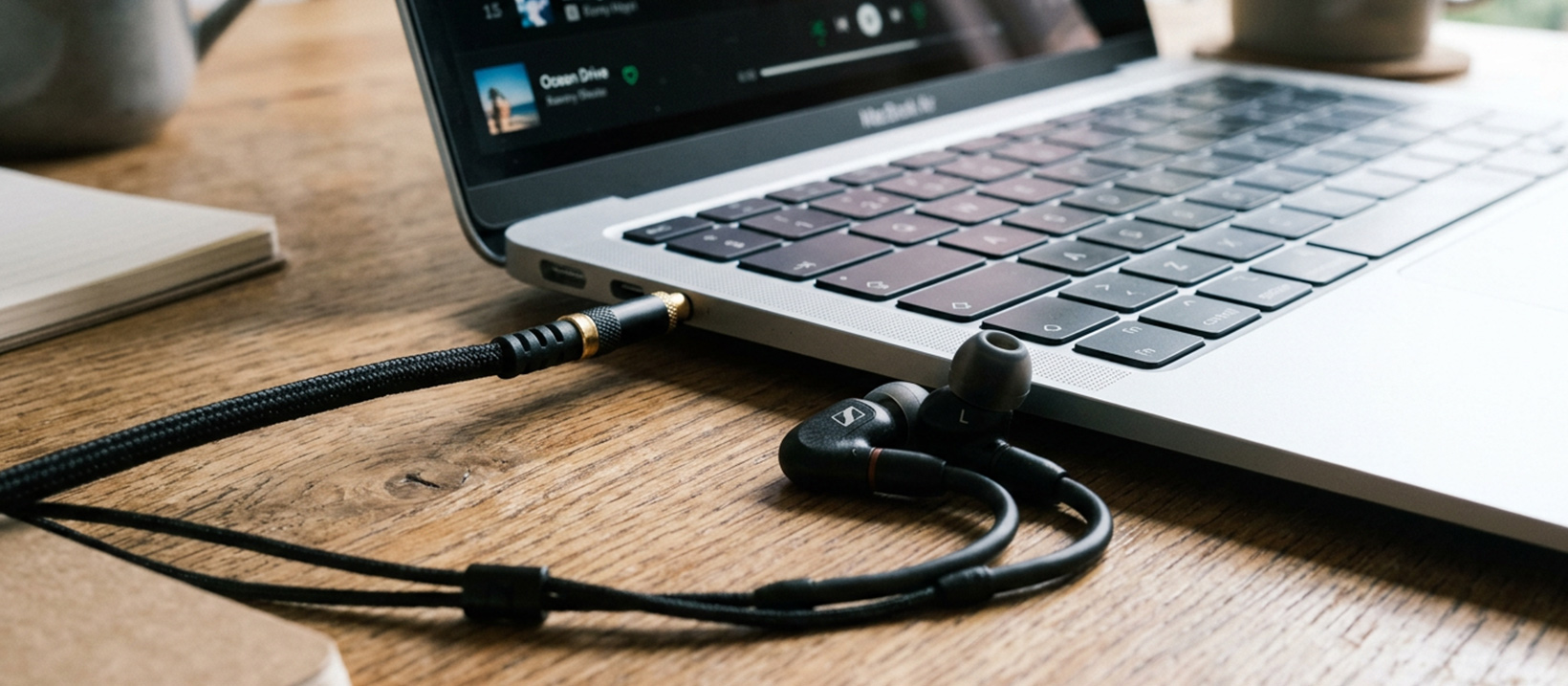
Your computer's built-in microphone was designed to be passable, not excellent. It picks up keyboard clicks, room echo, and ambient hum — all of which travel straight to your colleagues' ears. Speaking directly to an onboard mic is also an imprecise science: move an inch to the side and your voice drops noticeably.
The single fastest fix? Plug in a pair of wired headphones. Earphones with a built-in mic place the microphone right near your mouth, dramatically improving pickup clarity. They also keep audio out of the room, meaning anyone nearby won't accidentally overhear confidential discussions — something that could be an issue in shared households or open-plan spaces.
2. Eliminate Background Noise

Even with a decent mic, background noise is a constant battle. The solution used to be moving to a quieter space — but that's not always possible. AI-powered noise cancellation software like Krisp works silently in the background, filtering out everything from barking dogs to construction outside. It's compatible with more than 800 apps and works for both your outgoing audio and the incoming feed from other participants.
If you want a hardware upgrade that removes the software dependency entirely, a dedicated USB microphone with a cardioid polar pattern dramatically narrows what the mic actually captures. A cardioid mic picks up sound from the front and rejects noise from the sides and behind — perfect for noisy home environments.
3. Use a Virtual Whiteboard

A picture is worth a thousand words — and nowhere is that more true than in a remote meeting where you're trying to explain a process, sketch a diagram, or map out an idea. Most major conferencing platforms, including Zoom, Microsoft Teams, and Cisco Webex, have a built-in whiteboard function that lets everyone in the meeting draw, annotate, and collaborate visually in real time.
It works with a mouse, but if you're sketching anything more complex than a box and arrow, a stylus with a touchscreen laptop or tablet makes the experience dramatically more natural. The whiteboard can also be saved after the meeting, giving everyone a clean visual record without anyone having to type up notes.
4. Hack Your Background

A messy room, a window with harsh backlight, or a flatmate wandering past mid-meeting — your background says as much as your words do. Both Microsoft Teams and Zoom have background replacement built in. On Teams, look for the Background Effects button next to the mic toggle before joining a call. Zoom lets you replace your background with a static image or even a video loop, though you'll need reasonably capable hardware for the video option.
For a sharper result, a physical backdrop or ring light makes a noticeable difference. A ring light positioned in front of you evenly illuminates your face and removes the unflattering effect of screen-only lighting — which tends to make you look washed out or shadowed depending on the time of day.
5. Run a Chat Window on the Side
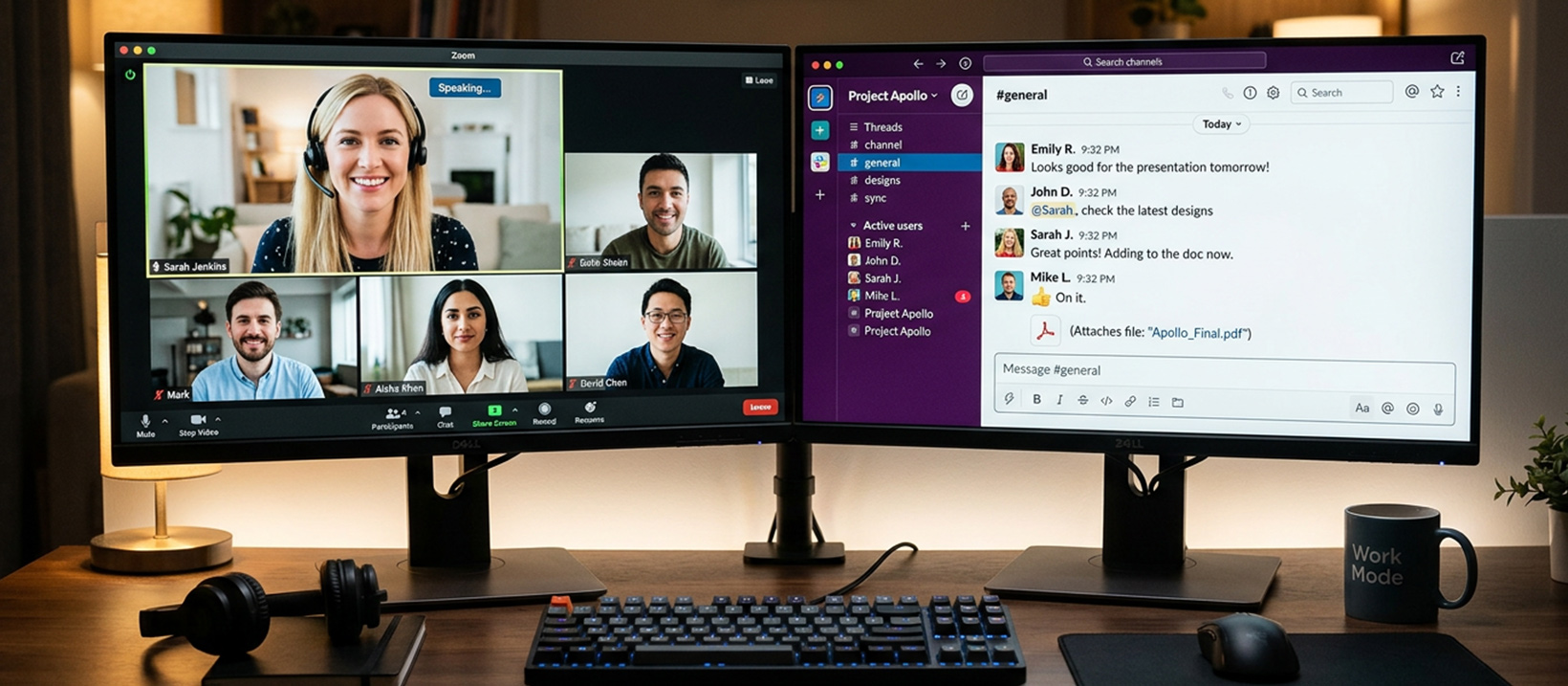
Meeting chat is one of the most underused features in videoconferencing. Zoom, Teams, and other platforms all support a sidebar chat that runs parallel to the call, letting participants drop comments, paste links, share files, and ask questions without interrupting whoever is speaking. It's particularly useful in larger calls where raising your hand or unmuting can break the flow.
If you're regularly jumping between a call window and reference materials, a second monitor is a genuine productivity upgrade. Even a modest additional display gives you space to keep the call visible while you work in a separate window — no more alt-tabbing while someone is waiting for you to share a screen.